
Ancient Cultures / Egypt
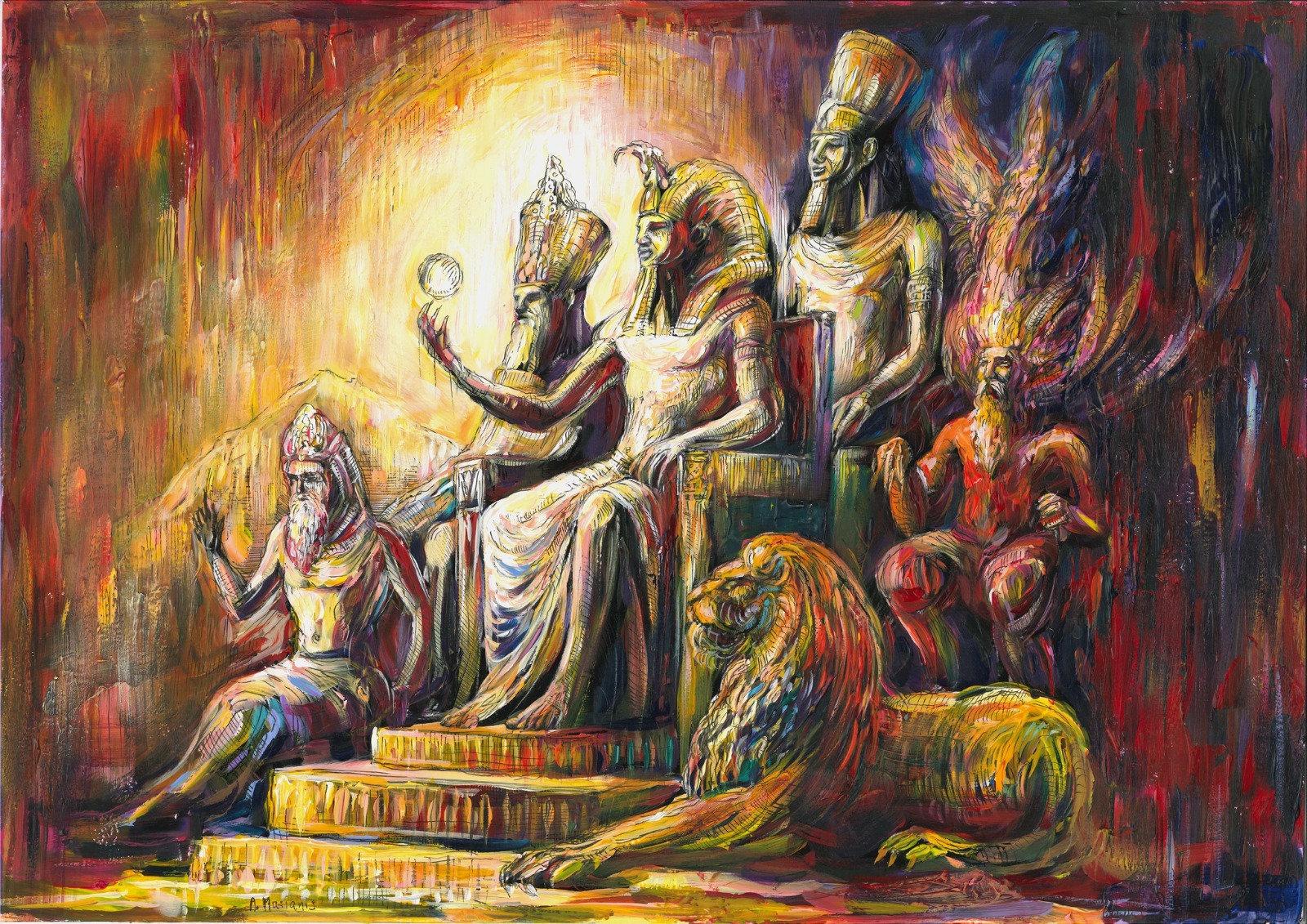

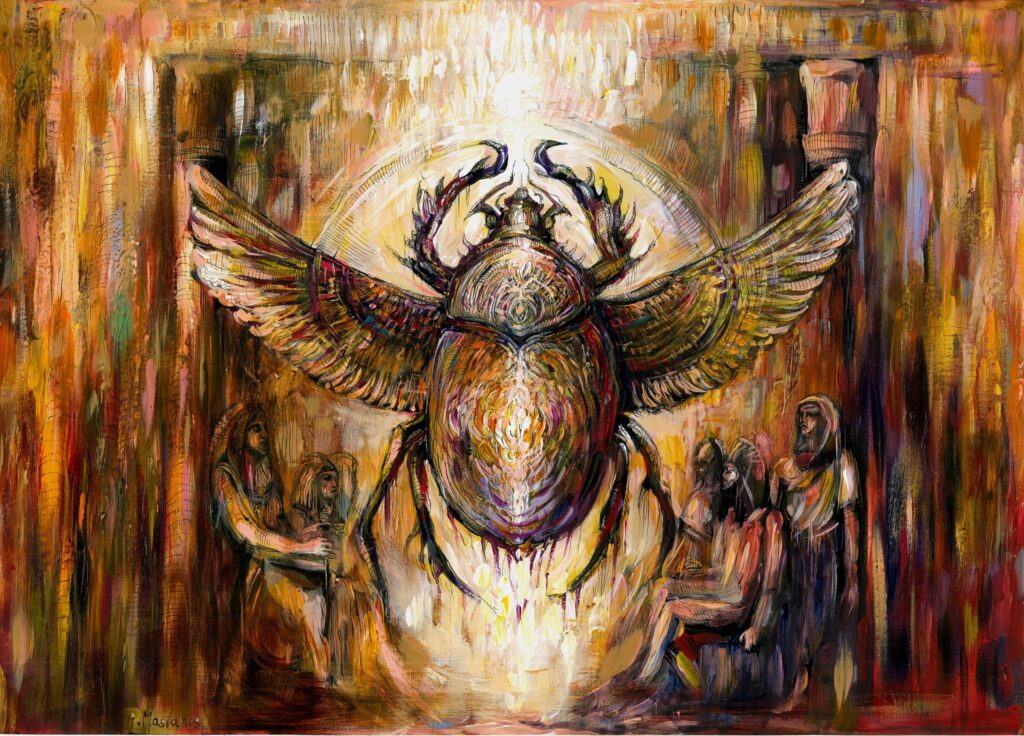
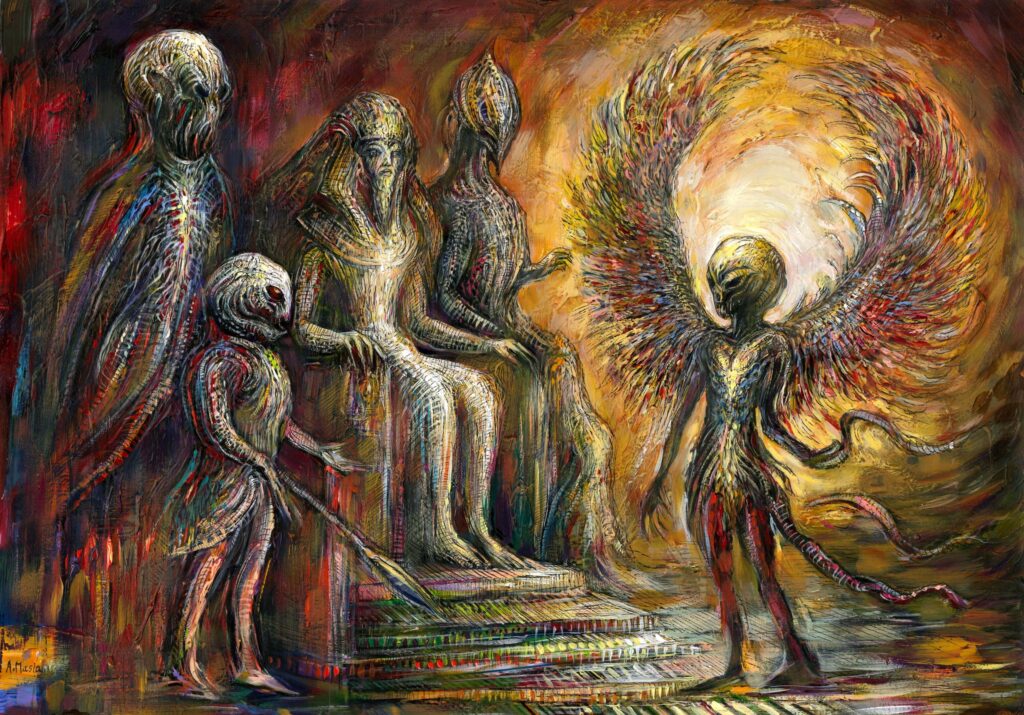
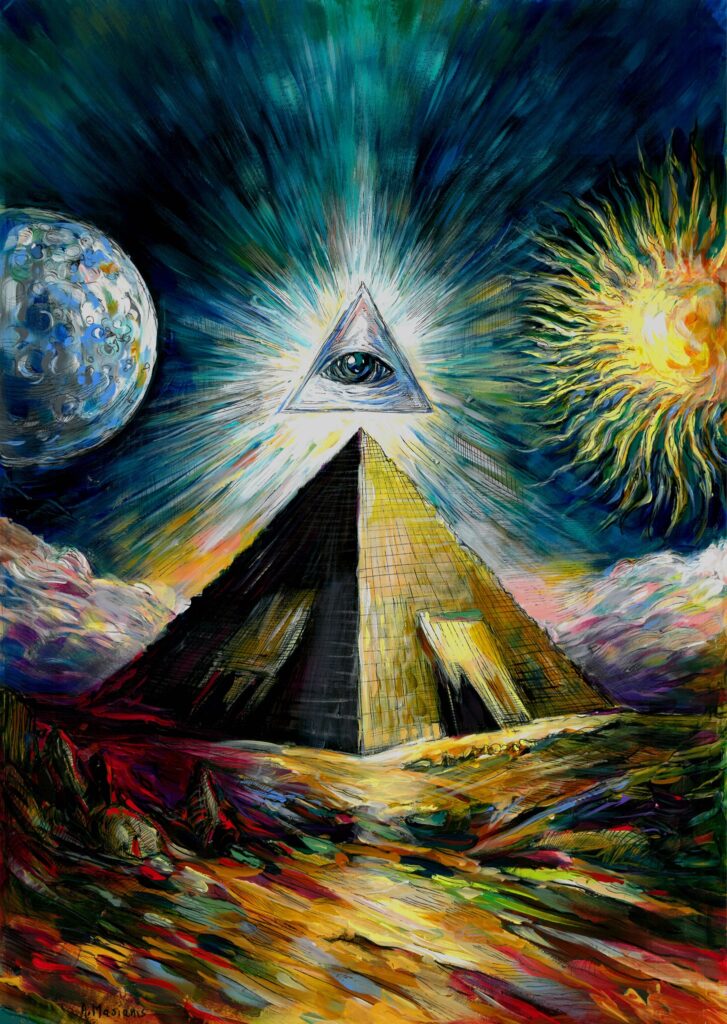
Paintings inspired by antiquity and Egypt draw from the tradition of ancient mysteries as a path of insight and contact with what is eternal — not merely from history and ornament.
These are visions of a world where symbols carry the power of a spell, and every gesture, sign, and proportion belongs to a cosmic order.
Gold, sand tones, and deep blues are not decorative here, but a sacred language — the light of the sun, the shadow of the underworld, and the vastness of the sky guiding the soul through the threshold of transformation.
Each canvas functions like a ritual record of memory: a fragment of a temple wall where time does not move in a straight line, but turns in a cycle of birth, death, and rebirth.
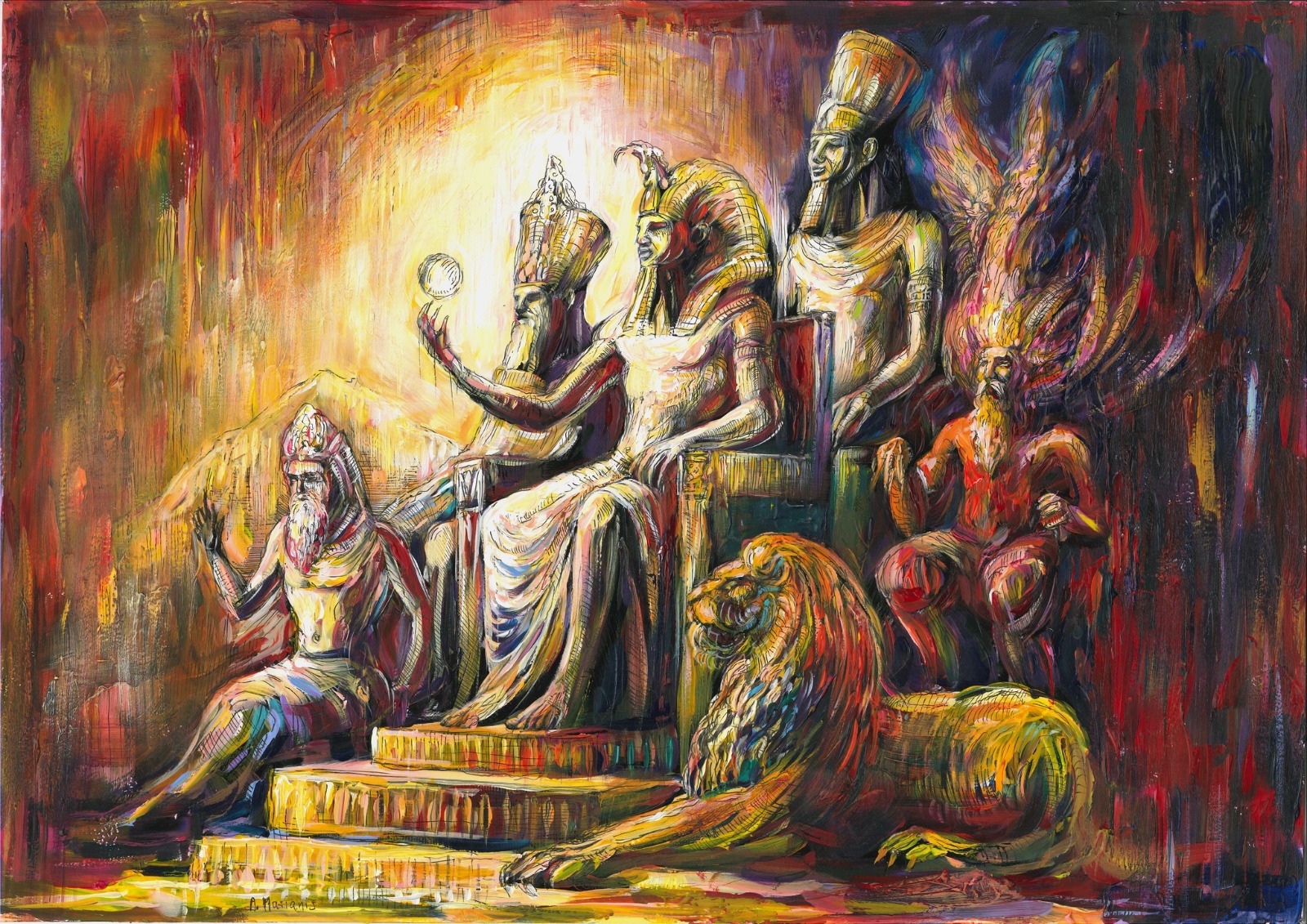
Figures and forms appear like archetypes rising from the silence of the desert — gods, guardians, and guides who do not tell stories directly, but reveal meaning through presence.
There are no literal narratives — significance is built through a hieratic rhythm, geometry, and the tension between light and shadow, life and what lies beyond.
A technique based on layered texture and color enhances the sense that the painting is like a palimpsest: rewritten, yet still carrying traces of an ancient world.
As a result, these works bring into the home an atmosphere of focus, mystery, and inner stillness, where art becomes a gateway to eternity.
Gallery
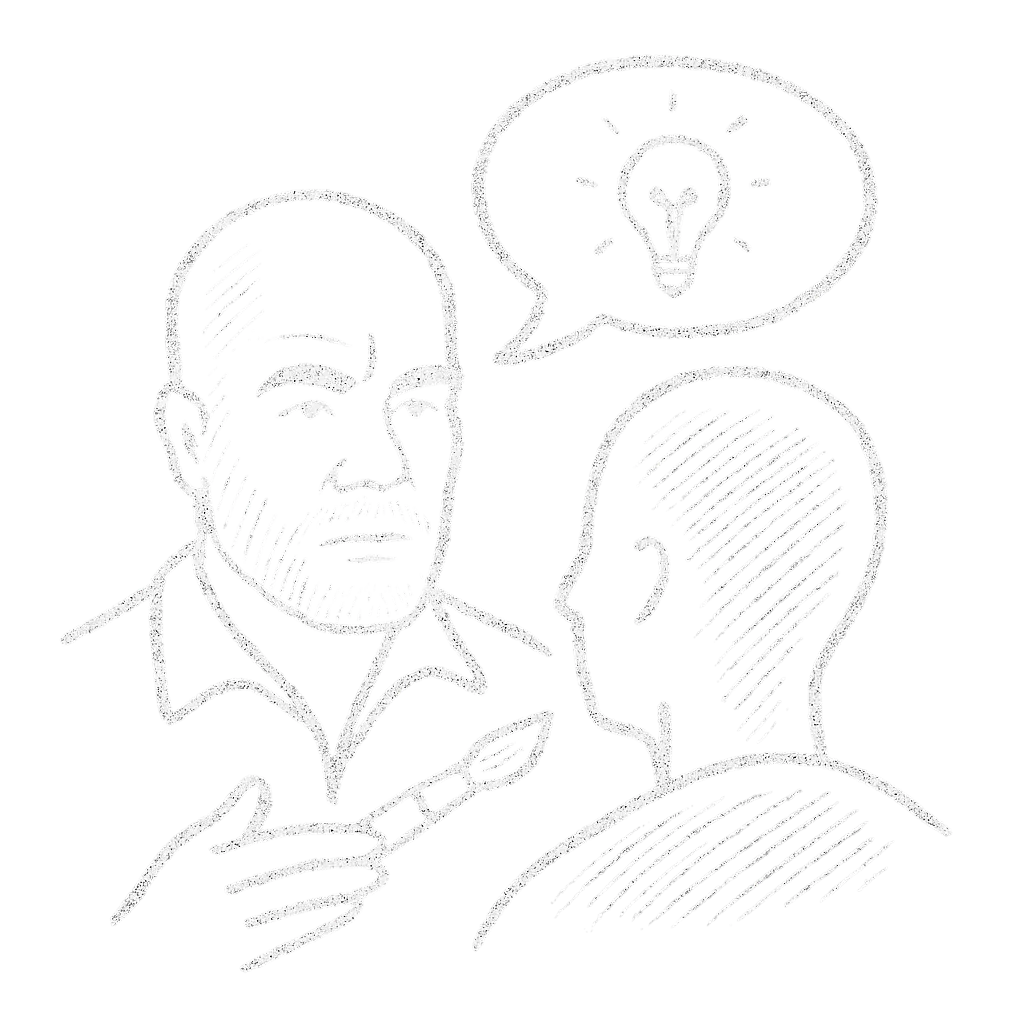
1. Concept & discussion
Everything begins with a meeting or conversation with the client.
It’s the moment when the artist listens closely to the emotions, symbolism, and intention behind the request.
It’s not just about the topic itself (“I want a forest”), but about the meaning — what that forest is meant to tell.
At this stage, the following take shape:
a description of the vision (verbal or symbolic),
a decision about the format and technique,
inspirations (photos, texts, emotions, myth, memory).
2. Concept sketch
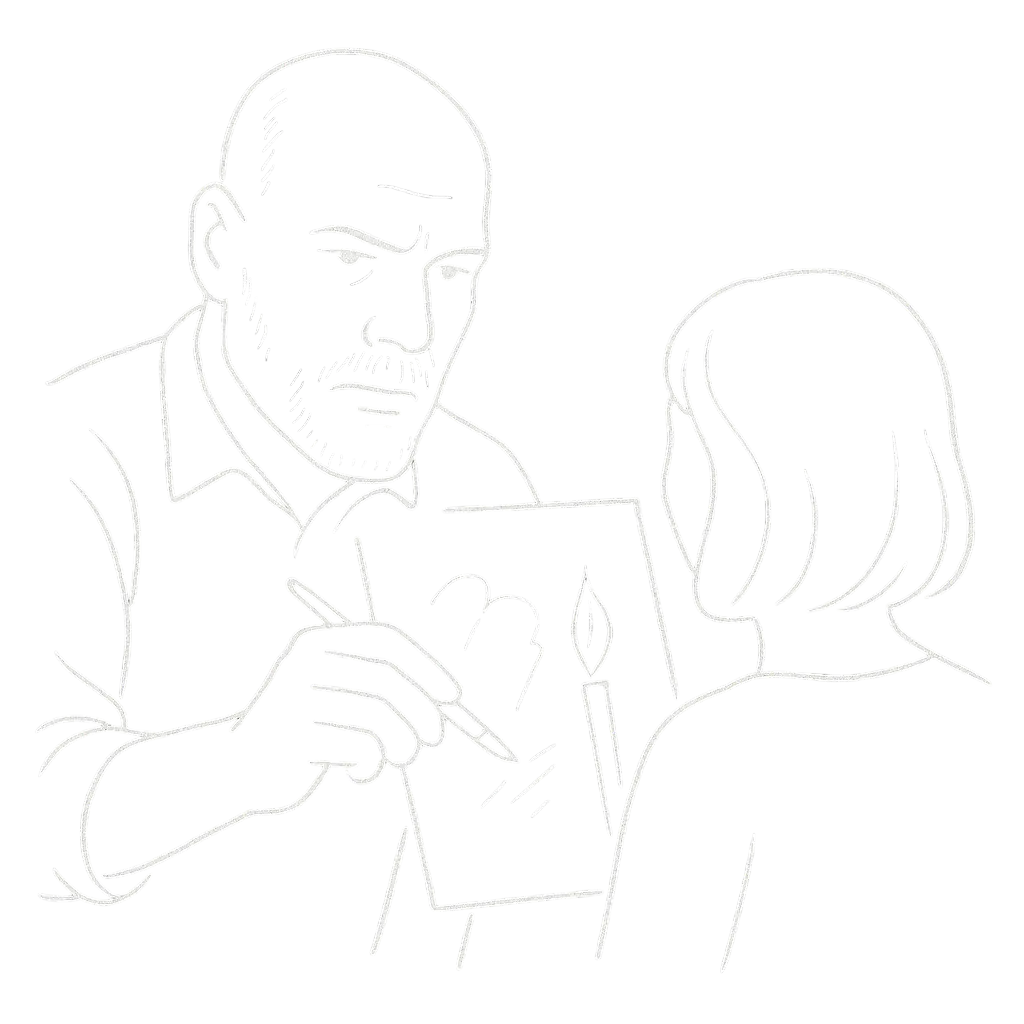
The artist creates 2–3 concept sketches (digital or pencil) to show the composition and mood.
The client chooses one direction, or optionally combines elements from several proposals.
This is the stage where the following are defined:
the dominant color palette,
the symbolism (whether figures, elements, or mythological motifs will appear),
the overall rhythm of the painting.
3. Preparing the Surface and Palette
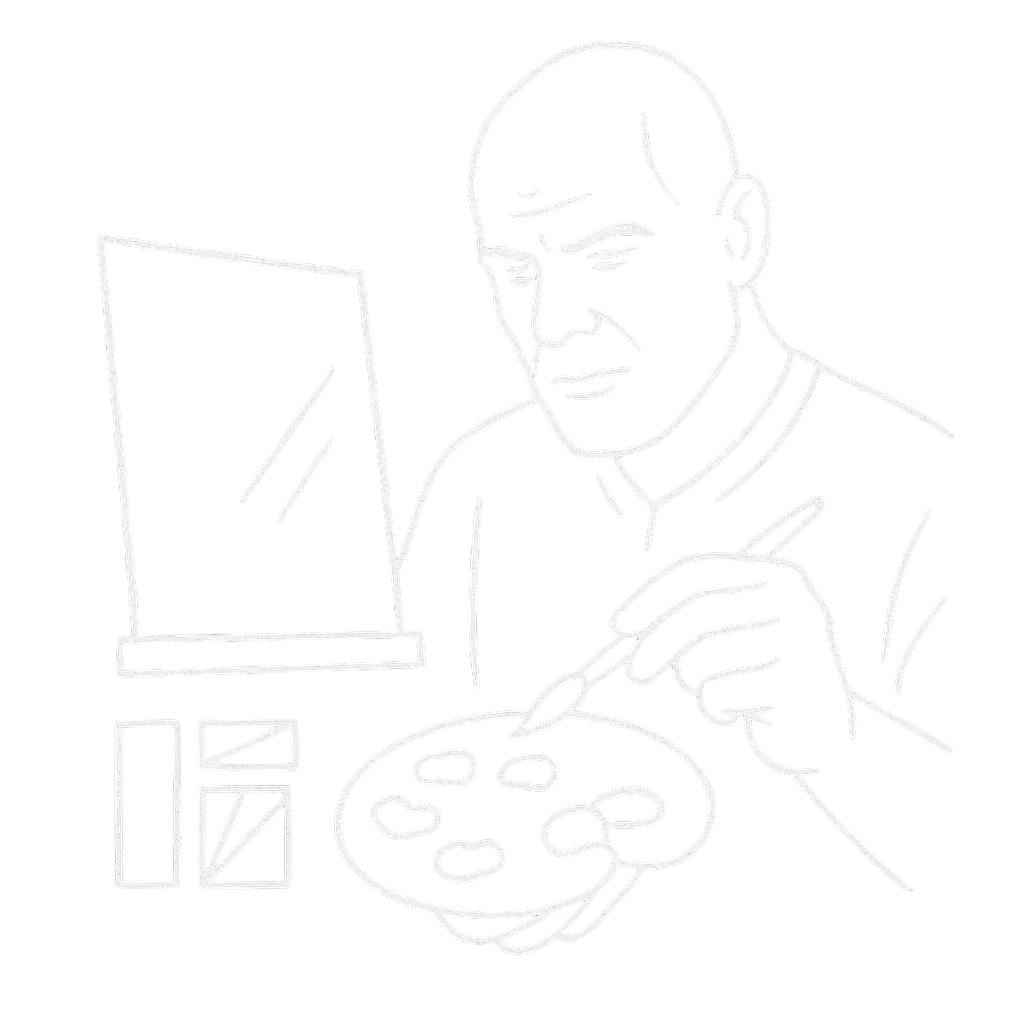
Once the concept is approved, the artist prepares the canvas, primer, color palette, and test color combinations.
They often also create a “light map” — an internal sketch of the directions of energy and emotion within the painting.
This is a stage of technical and spiritual calibration before the actual painting begins.
4. Painting
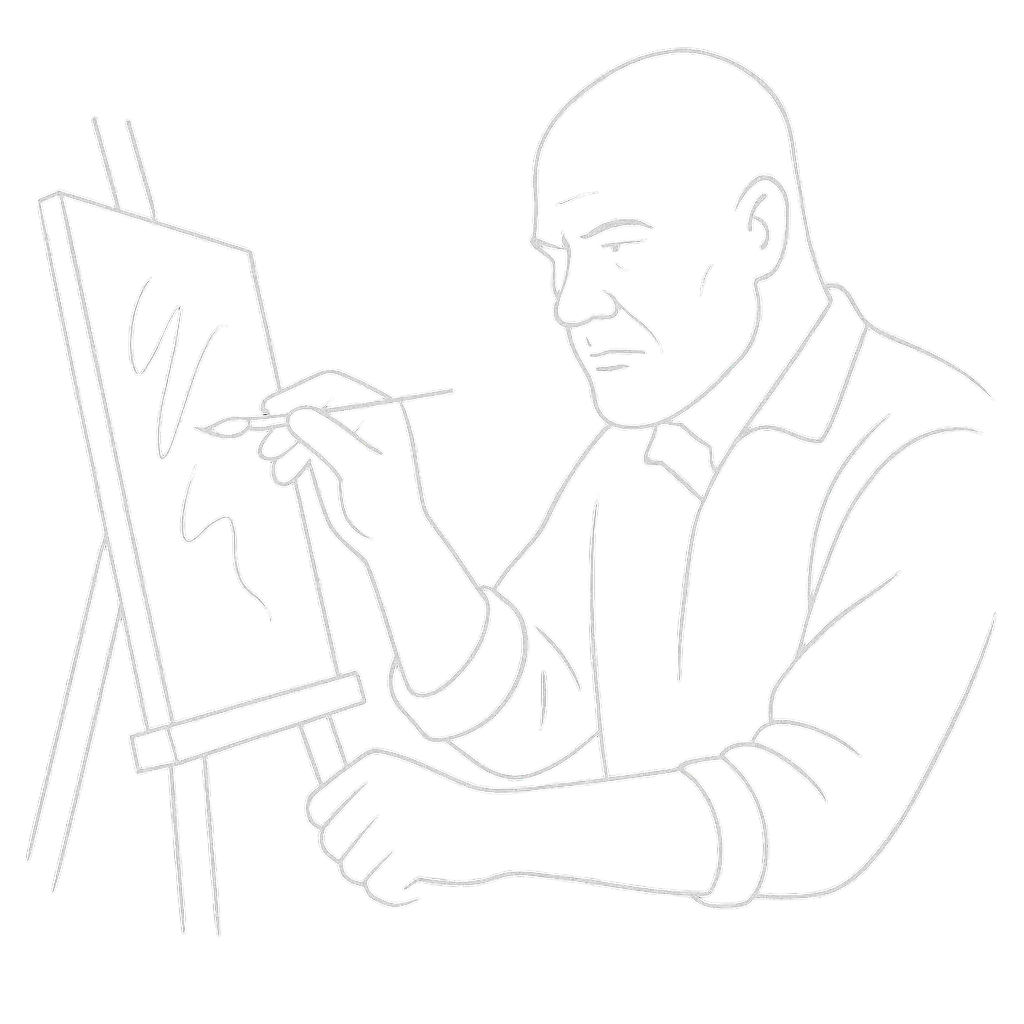
The first layers are about building mood, not details.
The artist paints through emotion, often listening to music or following the rhythm of their breath.
This is where the atmosphere is born — mist, shadow, light, the main color.
The client may (if they wish) see an initial photo and share their impressions, but without interfering in the creative process.
5. Narrative layers
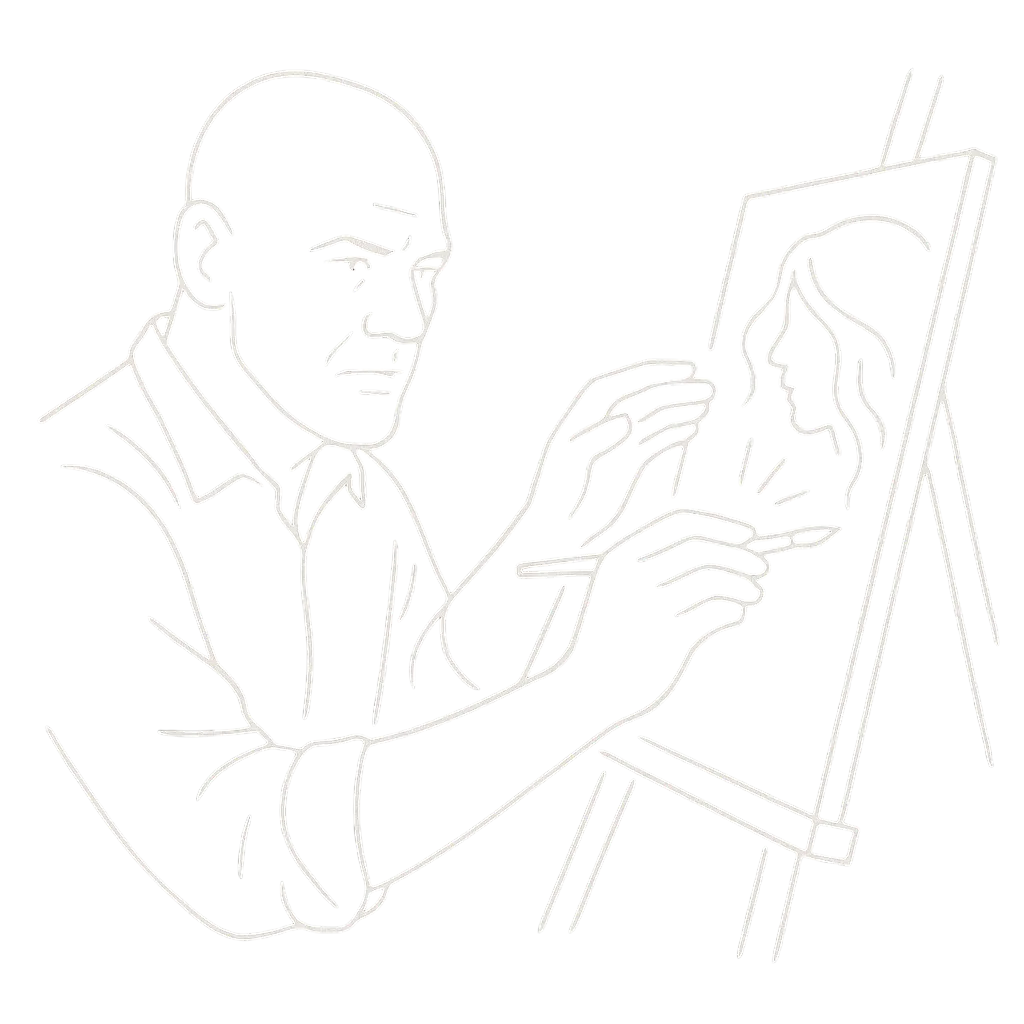
Once the mood is set, the content begins to appear — a figure, a symbol, a gesture, the relationship between forms.
The artist enters into a dialogue between the client’s vision and their own intuition.
This is the moment when the painting begins to “come alive,” and its meaning becomes multi-layered.
6. Final touches and signature
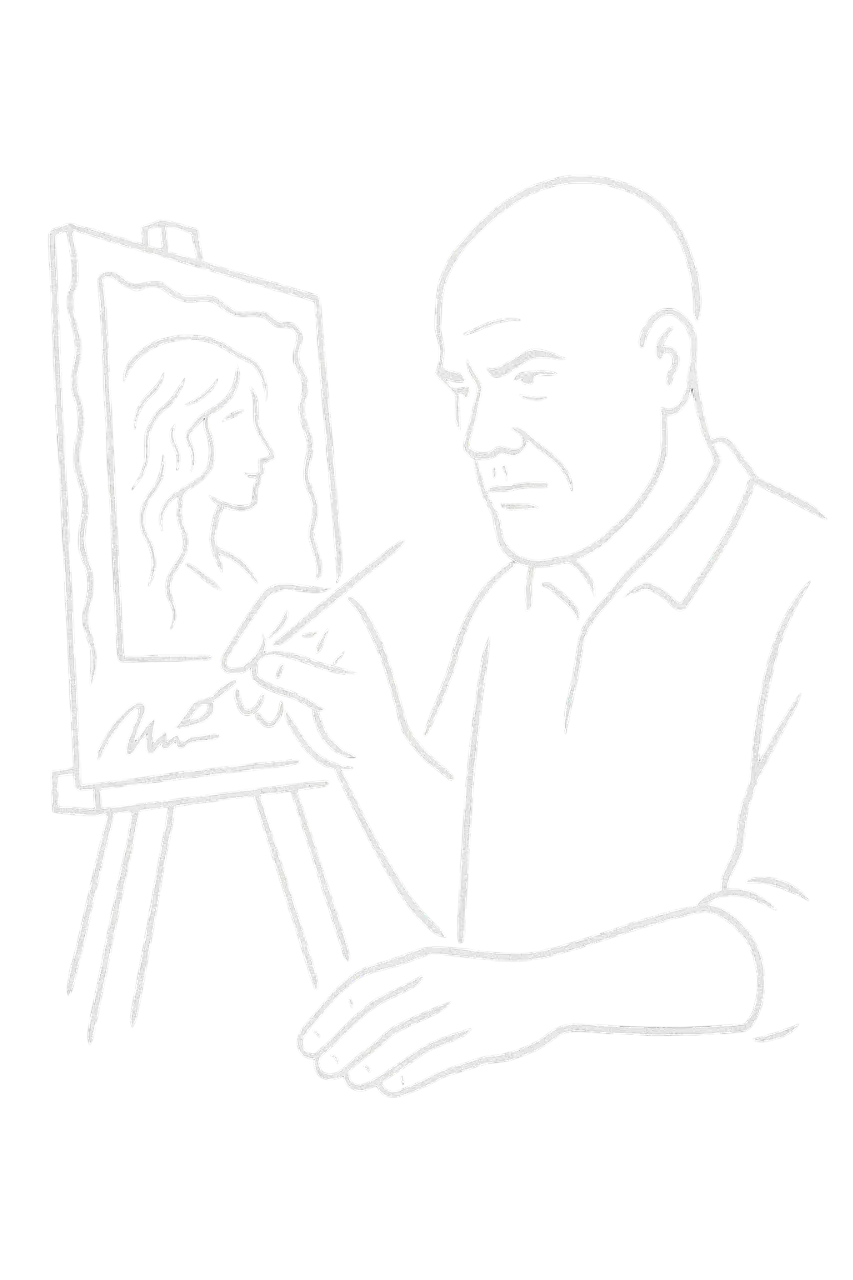
The final brushstrokes are about calming the composition and giving it rhythm and harmony.
The artist adds their signature — a mark of authenticity, but also a seal of energy.
Once the work is dry, it is varnished and prepared for presentation.
Najczęściej zadawane pytania
Jak mogę odebrać obraz?
Możliwe jest zamówienie obrazu z wysyłką lub zamówienie z odbiorem osobistym w Toruniu.
Jak mogę zamówić Twój obraz?
Zamówienie można złożyć bezpośrednio przez formularz na stronie, stronę na Facebooku, mailowo oraz Allegro.
Czy mogę wybrać kopię obrazu w innym rozmiarze?
Tak, wystarczy zaznaczyć w zamówieniu wymiary obrazu, a ja wykonam reprodukcję w wybranym przez Ciebie rozmiarze.
Mam zdjęcie, które chciał_bym zamienić w obraz. Czy możesz to wykonać?
Tak, wykonuję obrazy na podstawie zdjęć. Wystarczy wysłać zdjęcie drogą elektroniczną lub tradycyjną (w dobrej jakości).